
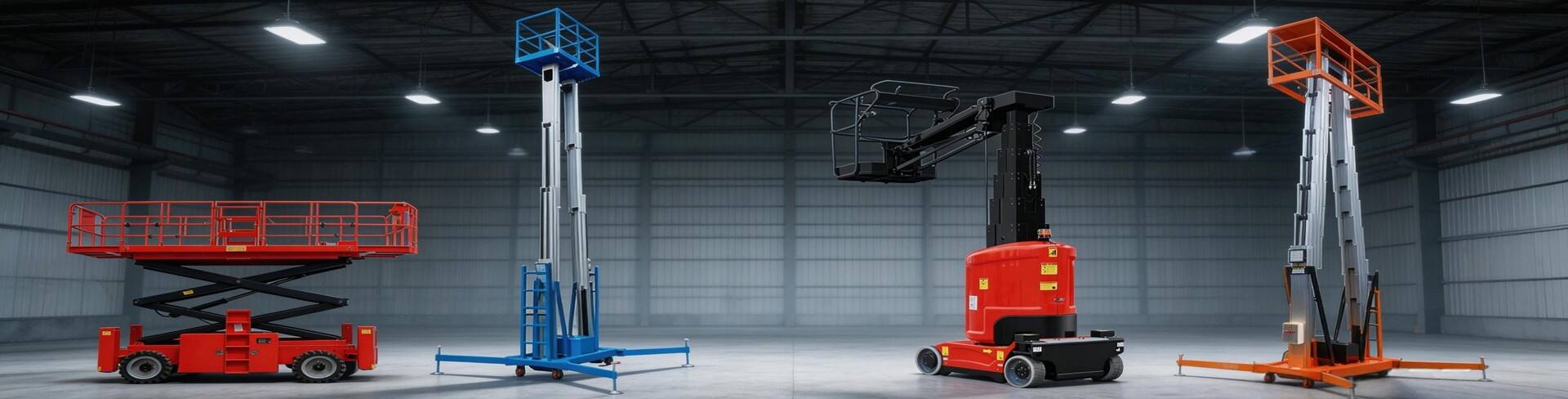
In the field of aerial work platforms, adaptability serves as a core indicator for evaluating equipment practicality. Widely adopted across the global market, towable boom lifts have become the preferred equipment for municipal maintenance, construction, landscaping and many other sectors, largely thanks to their outstanding flexibility and adaptability. This article focuses on the core features of towable boom lifts. Through an in-depth analysis of their design logic and practical value, it aims to provide professional guidance for industry practitioners and support them in the selection and operation of such aerial platforms.
The towable flexibility and superior adaptability of towable boom lifts are first reflected in their exclusive towable design, one of their key competitive advantages that differentiates them from other aerial work platforms. Unlike fixed aerial work platforms, towable boom lifts require no dedicated transport vehicles. They can be easily towed by ordinary construction vehicles, pickup trucks and other common vehicles, enabling flexible relocation across various work sites. This makes them particularly ideal for scenarios involving frequent site transfers. Whether in narrow streets of historic cities, busy construction sites or open outdoor areas, towable boom lifts can quickly reach operation locations without complicated deployment procedures, greatly boosting overall work efficiency.
Furthermore, its remarkable adaptability is enhanced by the rear towed boom design, allowing the equipment to operate effortlessly in hard-to-reach areas. Most towed booms adopt an articulated structure, enabling seamless switching between vertical lifting and horizontal outreach. Featuring an extensive telescopic range and a large rotation angle, the boom can accurately access every corner of high-altitude work areas. It is widely applicable to scenarios including old building facade renovation, street light inspection, tall tree trimming and bridge underside maintenance. The flexible mounting of the rear towed boom overcomes the limitations of traditional aerial work equipment, such as poor accessibility and difficult entry and exit, and meets operational demands at varying heights and angles.
The versatility of power options further highlights the flexibility and environmental adaptability of towed aerial lifts, which can be flexibly configured to suit different working conditions, striking a balance between operational practicality and environmental sustainability. For indoor operations and densely populated residential areas with strict noise and emission regulations, electric towed models deliver zero-emission and low-noise operation, minimizing environmental disruption and disturbance to local residents. For harsh and complex outdoor environments requiring long-duration continuous operation, diesel-powered versions offer stronger power output and independent performance, adapting to extreme working conditions such as drastic temperature changes and high dust levels to ensure non-stop operation.
In industrial applications, the high mobility of towable boom lifts breaks through the constraints of conventional aerial work equipment and meets a wide range of high-altitude operation requirements. In municipal maintenance, they can navigate narrow passages for the inspection of street lamps, billboards and public facilities. On construction sites, their agile mobility facilitates the installation of elevated pipelines and exterior wall construction projects. In landscape engineering, they can easily reach the tops of tall trees for pruning and routine maintenance. Such extensive adaptability makes towable boom lifts an efficient, multi-functional aerial work solution, helping enterprises reduce equipment procurement and operational costs.
It is worth noting that the exceptional flexibility and adaptability of towable boom lifts stem not only from modular design components but also from in-depth insight into diverse operational conditions across industries. The equipment organically integrates towing convenience, boom maneuverability and diversified power systems into an all-round adaptive solution. For industry professionals, a clear understanding of the performance characteristics of towable boom lifts enables targeted configuration selection based on specific on-site conditions, maximizing the operational value of the equipment. The adaptive design of towable boom lifts also provides valuable references for subsequent equipment research and development, driving the diversified advancement of the aerial work platform industry and comprehensively improving overall industrial efficiency and operational flexibility.